
At A Glance
Whiskey completed a 2-Week Board and Train with Off Leash K9 Training in Detroit, MI, and trainer Katie. His family had previously worked with another trainer, but chose Off Leash K9 Training for this program and reported being extremely happy with the decision. Whiskey’s main challenges involved nervousness, fear, and how he responded around other dogs. Throughout the two-week program, Katie focused not only on training Whiskey, but also on understanding his individual stress signals, giving him controlled exposure, and helping his family learn how to recognize and respond to those signals themselves.
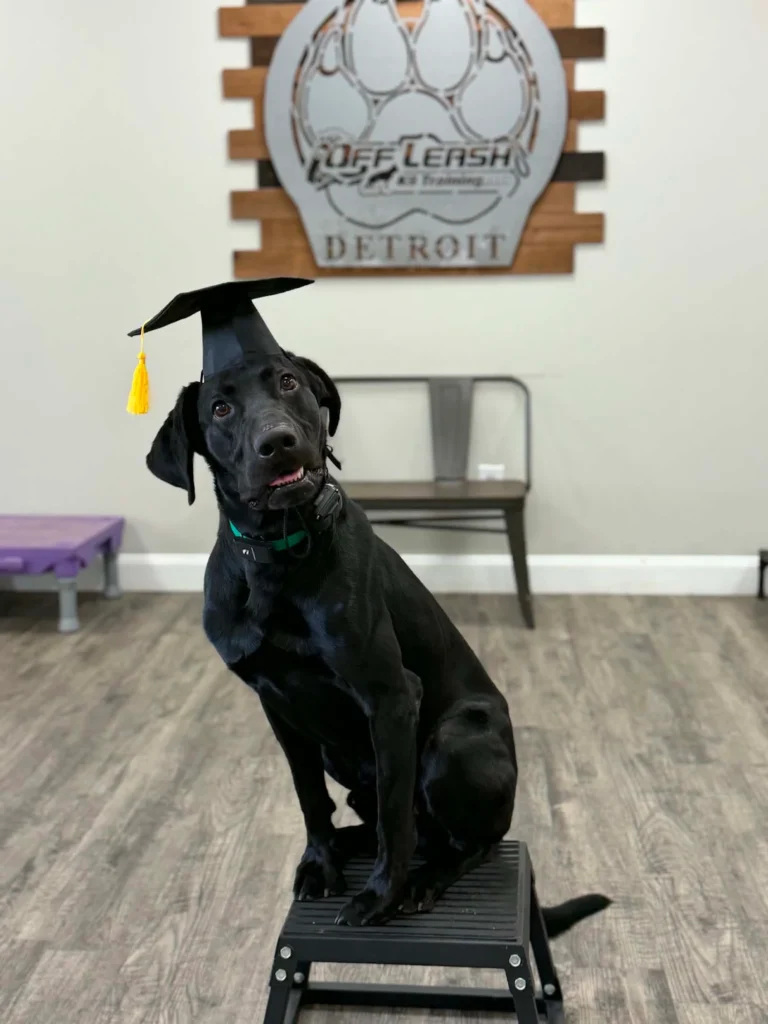
Dog: Whiskey
Trainer: Katie
Program: 2-Week Board and Train
Main Focus: Nervousness, fear, reactions around other dogs, controlled exposure, walking form, owner education, and emotional regulation
Outcome: Owner-reported improvement in confidence, coping around other dogs, relaxation, and owner understanding of Whiskey’s behavior
The Challenge
Whiskey entered training with fear and nervousness that affected how he behaved around other dogs. His owner wanted more than basic obedience. They needed help understanding why Whiskey became nervous, what signs appeared before his reactions, and how to respond in a way that would help him feel safer and more controlled.
Before Training, Whiskey Needed Help With:
- Nervousness around other dogs
- Fear-related reactions
- Learning how to relax
- Building confidence
- Developing more controlled responses
- Improving walking skills
- Working through uncomfortable situations
- Receiving structured exposure around other dogs
- Helping his owners understand his warning signs
- Creating a clearer plan for managing nervous behavior
The family also wanted training that would help them better understand Whiskey rather than simply correct his outward behavior.
The Training Approach
Katie took an individualized approach to Whiskey’s training. According to the review, she paid close attention to the subtle signs Whiskey displayed when he became nervous or afraid.
Training Support Included:
- Controlled exposure around other dogs
- Confidence-building work
- Helping Whiskey manage fear
- Teaching better walking form
- Practicing calmer responses
- Helping Whiskey learn to relax
- Daily videos
- Daily behavioral observations
- Explanations of why Whiskey became nervous
- Guidance on managing fear-based reactions
- Owner education
- A detailed transition plan for continuing the work at home
Katie also documented specific details about Whiskey’s behavior each day. She identified facial expressions, physical cues, and other small changes that signaled when Whiskey was becoming uncomfortable.
Understanding Whiskey’s Stress Signals
One of the most meaningful parts of the program for Whiskey’s family was learning his individual “tells.”
Katie helped them recognize:
- Facial expressions associated with fear
- Physical changes when nervous
- Patterns that appeared before reactions
- Situations that increased discomfort
- How nervousness could influence behavior around other dogs
- When Whiskey needed additional guidance or structure
The family felt that this level of understanding showed how much time Katie had invested in getting to know Whiskey as an individual dog.
The Results
Whiskey’s owner reported meaningful progress through the two-week program.
What Improved:
- Confidence increased
- Whiskey became better able to work around other dogs
- His owners gained a better understanding of his fear
- Walking skills improved
- Nervous behavior became easier to interpret
- The family learned how to respond to his stress signals
- Whiskey developed better tools for relaxing
- His owners felt better equipped to continue confidence-building work
- Communication between Whiskey and his family improved
The review does not claim that Whiskey’s fear or nervousness disappeared completely. Instead, the family left training with a stronger understanding of his behavior and a structured plan for continuing his progress.
The Turnover Session
Pickup day became an important part of the training process. According to Whiskey’s owner, Katie spent approximately four hours with the family reviewing what she had learned.
She explained:
- Whiskey’s individual stress signals
- What different behaviors could indicate
- How fear could influence his reactions
- How similar emotional responses might appear in real-world situations
- Ways the family could respond
- How to continue building confidence
- How to help Whiskey relax around other dogs
- How to maintain structure after training
The family left with a clear plan instead of simply receiving Whiskey back without guidance.
Trainer Insight
For fearful or nervous dogs, behavior should be interpreted in context. A reaction around another dog may be influenced by uncertainty, fear, overstimulation, or an attempt to create distance. Simply correcting the visible behavior without understanding what comes before it can miss important information. Learning a dog’s individual stress signals can help handlers recognize discomfort earlier and respond before the dog becomes overwhelmed. Controlled exposure can also be useful when it remains structured and appropriate for the dog. The goal is not to force interaction, but to help the dog experience manageable situations while learning to remain connected to the handler. For Whiskey, continued improvement will depend on consistent practice, appropriate exposure, and his family continuing to recognize and respond to the cues they learned during training.
Ready to Help Your Dog Build More Confidence?
If your dog becomes nervous around other dogs, struggles to relax, or shows fear-related behavior, professional training can help you better understand those responses while building clearer communication and practical coping skills.
Schedule a consultation today to talk through your dog’s fear, nervousness around other dogs, difficulty settling, or other behavior concerns.